Our director, Professor Esteban Vera Rojas, has been awarded a Fondecyt Regular grant to design and develop optical neural networks capable of measuring and correcting the effects of atmospheric turbulence, which affects both astronomical observation and free-space optical communications.
The project, called DONNAS – Diffractive Optical Neural Networks for Adaptive opticS, proposes the design of neural networks using diffractive optical layers to correct atmospheric distortions without relying on complex digital computation, improving atmospheric correction in telescopes and laser communications while providing a more compact, lower-cost, and more energy-efficient solution.
Adaptive optics and optical communications
By 2030, Chile will host 2 of the world’s 3 extremely large telescopes (ELTs), with apertures greater than 25 meters, further consolidating its position among global leaders in astronomical observation.
Alongside this development, the number of satellites in Earth orbit has steadily increased, driving the expansion of high-capacity optical communications and making it increasingly necessary to implement technologies capable of transmitting large volumes of information efficiently and securely, both in satellite and terrestrial applications.
Both fields share a common challenge: atmospheric turbulence, which distorts the path of light, making both observation of the universe and information transmission through free-space optical links more difficult.
To address this problem, adaptive optics is a key technology, since it enables real-time correction of distortions caused by the atmosphere. However, as telescopes grow larger and applications demand higher speeds, these systems become more complex, costly, and computationally demanding.
Next-generation solutions
In this context, Optolab researchers explore and promote the use of deep learning techniques to improve the performance of these systems. However, the DONNAS project goes a step further by proposing the development, testing, and validation of optical neural networks, which will make it possible to perform tasks such as wavefront sensing and correction while reducing or even eliminating the need for digital processing.
“While we have been strong advocates for the use of AI techniques to improve adaptive optics systems, we also know that electronics impose an unavoidable bottleneck for the measurement and control of fast phenomena such as atmospheric turbulence,” adds Benjamín González, an Optolab PhD student involved in the project.
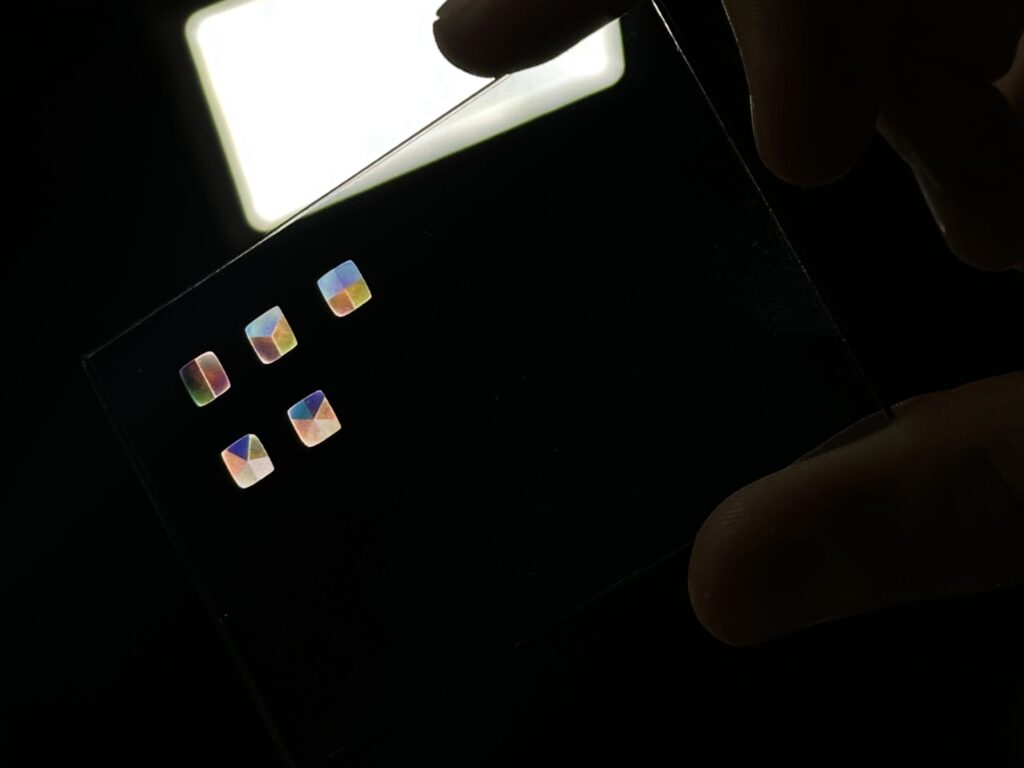
To tackle this challenge, diffractive optical elements will be designed in the laboratory using artificial intelligence techniques. These elements will consist of layers of photosensitive holographic films in which patterns generated by optical neural networks are recorded, allowing the device itself to perform the information processing. Once integrated into the optical system, it will simplify the system architecture and significantly reduce computational requirements.
González explains: “Over the last decades, we have seen a transition from the electron to the photon, both in storage—CD, DVD, Blu-ray—and in data transmission through optical fiber. What is now missing is data processing, where we can also use photons, which through optical manipulation can perform computational operations at the speed of light. This disruptive project will allow us to explore the use of optical computing to develop smarter, more compact, more efficient, and lower-cost adaptive optics systems.”
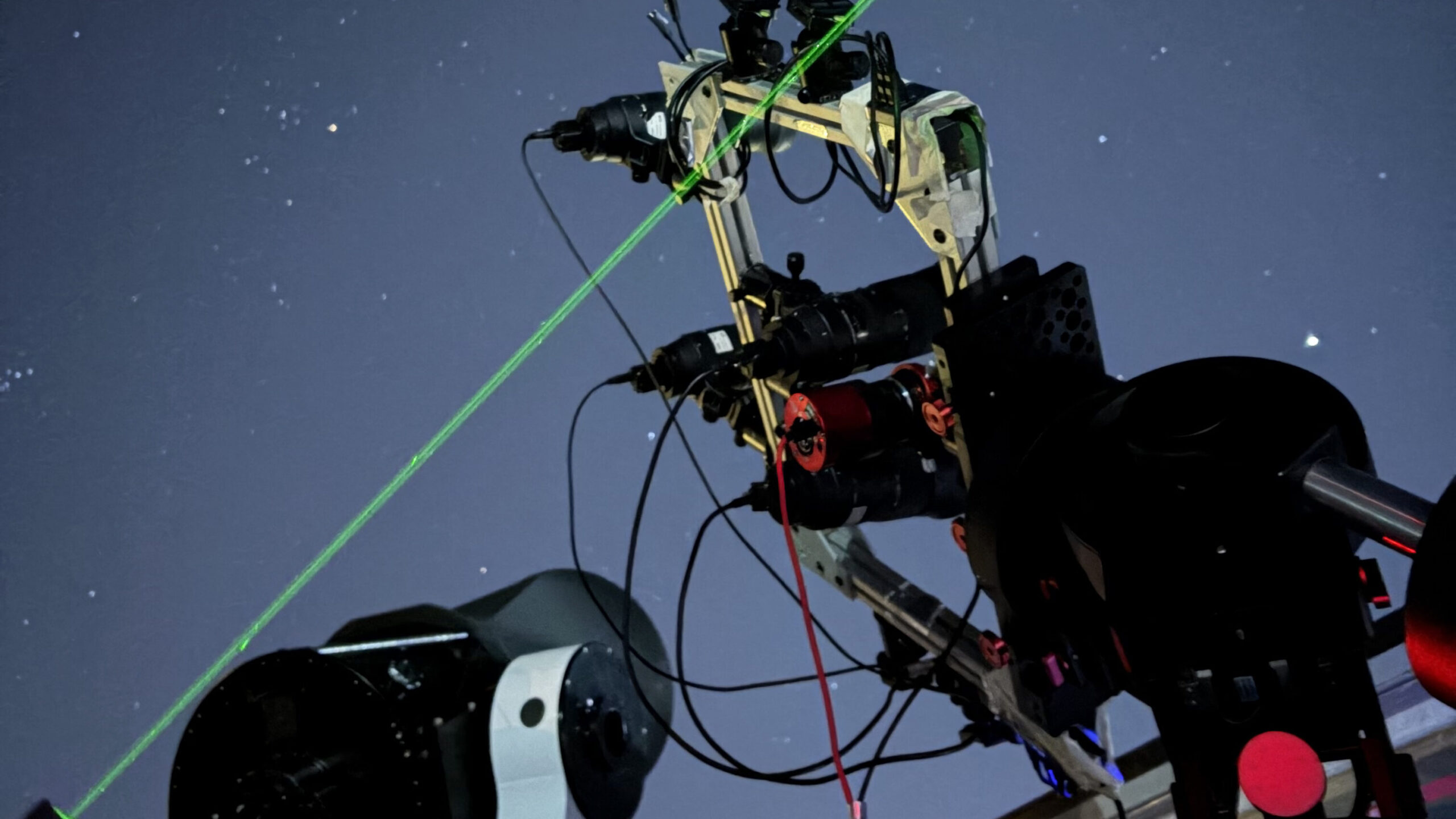
These new optical neural networks will not only be tested and validated in the laboratory, but also on sky, using the telescopes of the Space Research Observatory at the Curauma Campus, which has a ground optical station built through the SEETRUE Project Anillo and will continue to grow with new equipment provided by the laboratory’s newly awarded projects, including Fondequip Mayor and the QOMMTRUE Anillo Project.
In this way, the project seeks to advance technological solutions that respond to global challenges in astronomy and communications, while being developed and implemented locally in the Valparaíso Region. It will also continue contributing to the training of undergraduate and graduate students in areas such as artificial intelligence and adaptive optics, while further consolidating itself as a privileged space for science outreach by bringing these developments closer to the community.