
Felipe Guzmán, a postdoctoral researcher at Optolab who will continue his work at the University of Tokyo, led promising research with potential applications in biomedicine and astronomy, and it was published in the open-access journal Advanced Imaging.
The article, titled “Support-free speckle-correlation imaging with implicit neural representation”, presents a new approach to imaging through unknown scattering media, marking a new paradigm in image representation.
This work, which explores new ideas in image formation, was developed by Dr. Guzmán during his postdoctoral research at Optolab. It is partially related to a previous publication; both are collaborations with Professor Ryoichi Horisaki and the University of Tokyo.
“We are very pleased with the results and believe this was an important contribution to the computational imaging community,” said Dr. Guzmán. He added that, in addition to being a key part of his postdoctoral research, the project has also strengthened the collaborative network with the Japanese institution.
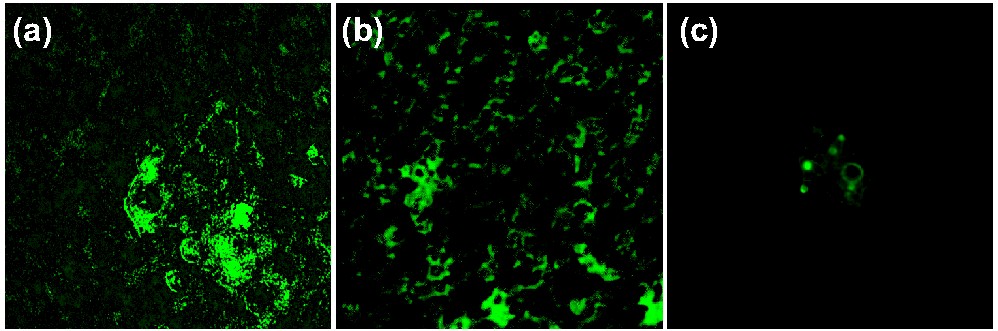
The proposed approach is based on the use of speckles, that is, granular light patterns generated when an object is illuminated through a scattering medium. By analyzing the correlations between these patterns, it is possible to reconstruct the shape of the hidden object using neural networks, without directly observing it. For example, when imaging through biological tissue, no incision would be required.
One of the most relevant aspects of the study is the type of networks used for image reconstruction, known as untrained neural networks. Unlike conventional methods that rely on large datasets and extensive pre-training with thousands of images, this approach does not depend on prior training data. This avoids the use of large datasets, reduces computational load, and leverages the structure of the neural network itself as a form of regularization, enabling more flexible and less biased reconstructions.
In addition, the reconstruction is supported by an implicit neural representation, in which a neural network is used to learn a continuous mathematical function that describes the object based on the autocorrelation of the measured data, rather than representing the image as discrete pixels. This provides greater flexibility when working with high-resolution or large-scale images.
“Under this paradigm, the neural network is no longer a black box that simply reconstructs an image; instead, it becomes the image itself or the image is encoded within the network’s neurons. The user can query the value at any pixel position, and the network returns it. This provides the freedom to evaluate the image at arbitrary scales, including pixels that did not originally exist in the captured image,” added Dr. Guzmán.
This advance is particularly significant due to its non-invasive nature, opening the door to potential applications in biomedicine, such as imaging through biological tissue. The approach may also be relevant for remote sensing and astronomy, where atmospheric propagation imposes significant limitations on image formation, as well as for optical telecommunications systems and other areas in which light propagates through complex media.
The work also opens several future research directions, including extending the method to multidimensional imaging, such as temporal sequence reconstruction (video), and incorporating spectral or color information into images obtained through scattering media.
From Optolab, we congratulate the researchers on this achievement and on the recognition that comes with publishing this work in Advanced Imaging. We look forward to the next developments arising from this line of research.